
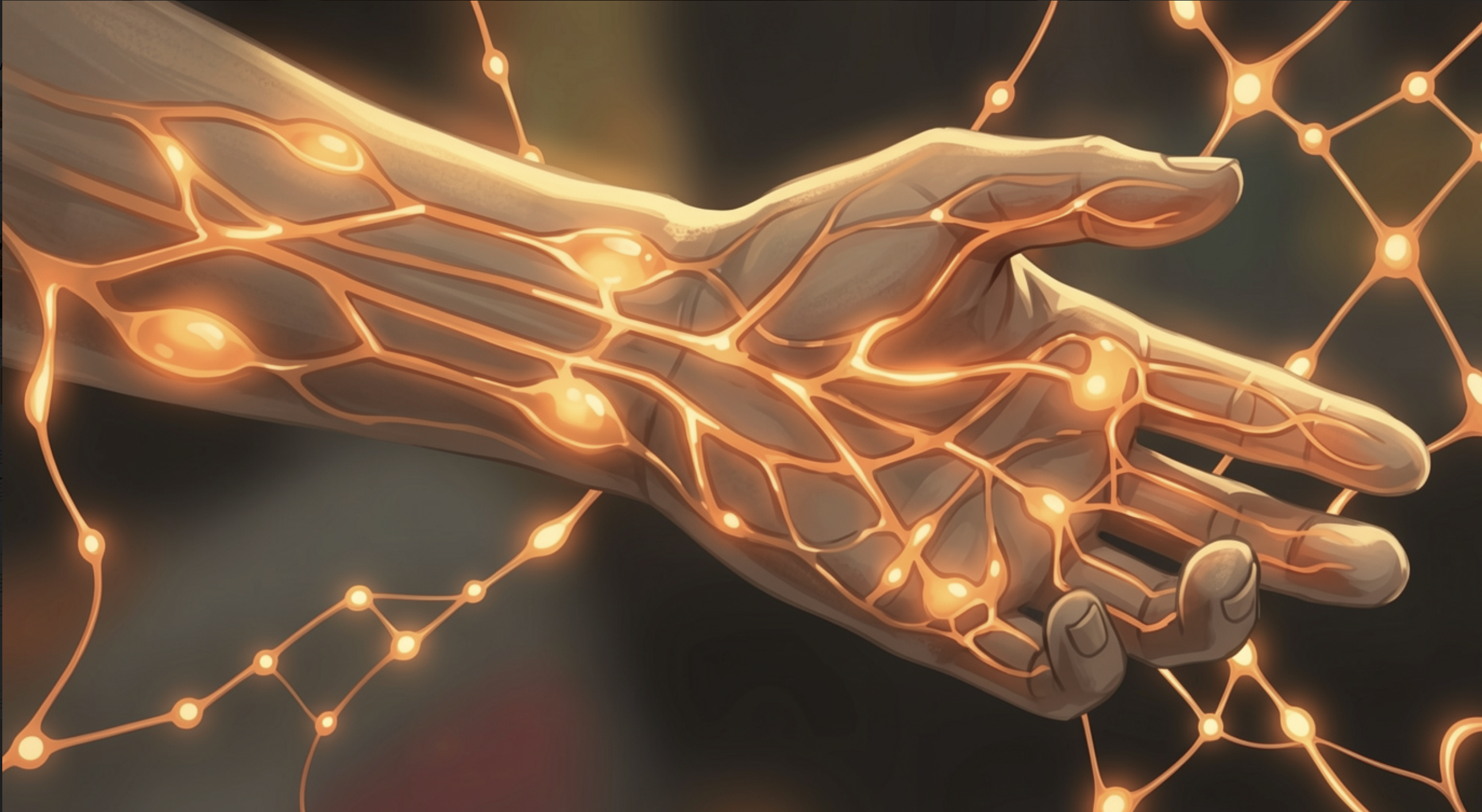
In 2018, a team of researchers published a paper proposing that we’d been missing an organ. Not in some obscure corner of the body but everywhere. Layered through skin, lining the digestive tract, wrapping arteries and veins, threaded into muscle. They called it the interstitium: a vast, fluid-filled network of spaces that had been hiding in plain sight for the entire history of modern medicine.
It hadn’t been overlooked because it was small. It had been overlooked because of the way we look.
The standard technique for preparing tissue for a microscope slide involves draining the fluid, slicing the sample thin, and fixing it in place. That technique works beautifully for studying dense structures such as cells and vessels, the things we already knew were there. But it had a side effect. When the fluid is drained, the spaces it once filled collapse. What had been a three-dimensional, fluid-filled scaffold becomes a flat, dense band of tissue. The interstitium, in other words, wasn’t invisible. It was being erased by the very act of preparing to see it.
I keep coming back to this story.
Not because it’s a fun science fact, though it is. And not because it’s a tidy parable about Western medicine missing what other traditions have known. In this NYT Magazine article there’s a story about a researcher presenting these findings at a conference in China, and an audience member raising their hand to say: we have been working with this system for 4,000 years. That moment matters, and I’ll come back to it.
What keeps catching at me is the simpler, harder thing underneath. The method of looking shaped what could be seen. The frame didn’t just fail to include something. It actively flattened the thing out of existence, and then declared that what remained was the whole picture.
It’s not a metaphor I want to over-extend, but I do want to engage with it for a moment, because we are doing something a lot like this with AI in our classrooms and offices right now.
Walk into almost any conversation about AI at work and you will find a remarkably consistent set of objects on the table. Prompts. Outputs. Tools. Use cases. Policies about which platform is permitted for which task. Benchmarks for how much time was reclaimed. Side-by-side comparisons of which model wrote the better lesson plan, the better memo, the better summary. These are the structures we can see clearly, the cells and vessels. The discrete, namable, photographable parts of the practice. It’s what we’ve always done, measuring what we can see, which is a stand in for measuring what matters, which can be a lot harder.
What we are looking at far less carefully is what lives in the spaces between.
The spaces between are where the work actually happens. A teacher reads a student’s face and decides, in a moment, that this is not the moment for the planned next question. A team lead reads the energy in the room and decides the planned agenda will have to wait. An evaluation is returned (an assessment, a performance review, a piece of client feedback ), and the conversation that follows in the hallway or over coffee shapes what the person does next far more than the rating itself did. A team sits with a piece of work and slowly, together, develops a shared sense of what good looks like in their domain. Sometimes it’s a sense they could not have articulated before they did the work of building it together. None of those moments are an output. None of them photograph well. None of them show up cleanly on the slide of an AI-use case study. And all of them are the connective tissue of learning.
When we frame AI in our work the way the standard slide-prep technique frames the body, as a question of which discrete tasks can be done faster, the connective tissue collapses. We end up with a flat, dense picture of work as a series of completable units, and a story about AI that says: most of those units can be done by something else now, and you should be relieved.
The relief is real. The picture is incomplete. Worse, the picture is being declared the whole picture, because what got flattened out of it is hard to see and even harder to name.
This is the part where it would be easy to land smugly. Easy to say that practitioners have known forever what AI developers are only now half-discovering. There is a version of that statement that is true. The professions that have been at this longest — teaching, medicine, law, the trades, the crafts — have head starts of decades or centuries on questions about what mastery is, what understanding feels like from the inside, what it takes to develop judgment. The audience member at that conference was not being humble.
But the harder, more honest version of the lesson turns the lens both ways. Every dominant frame has blind spots, including ours. The AI developers and researchers we are tempted to talk past are also seeing things, like what is actually changing in the technology, about how language and pattern and prediction work, about the shape of what is coming. These are things that most of us are only beginning to grasp. The audience member who said we have been working with this for 4,000 years was right. So was the researcher, who had spent a decade developing the imaging technique that finally let the interstitium be seen.
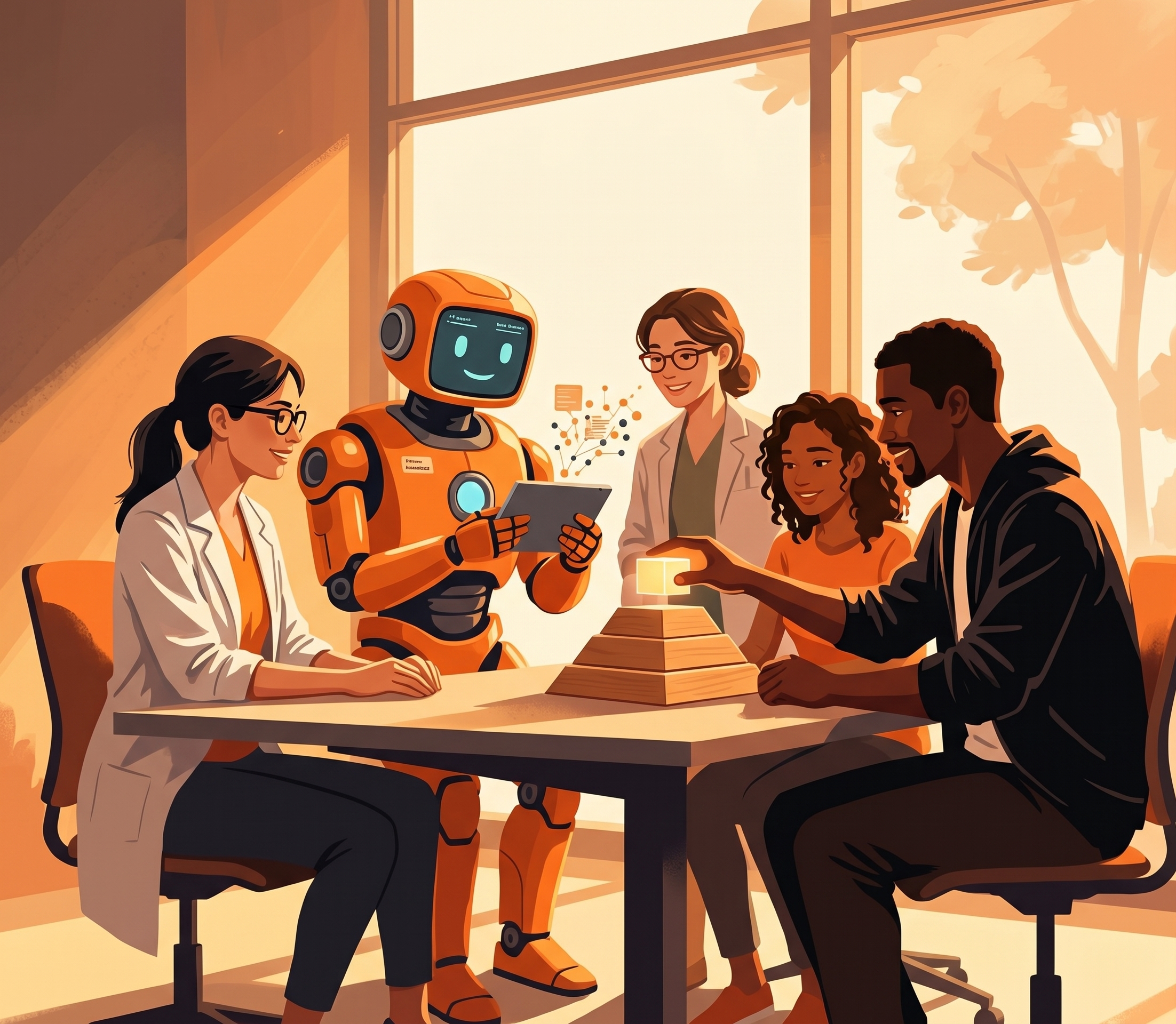
The interesting room is the one in which both voices are present. Where the people who have been working with the fluid between things and the people who have just figured out how to image it are in the same conversation, neither one declaring the other’s frame untrue.
That is the room we are trying to build at UnconstrainED. Not the room where one tradition is right and the other is catching up. The room where two ways of seeing can sit with each other long enough to ask: what is your slide-prep technique flattening? What is mine?
We don’t think the most important question about AI in our work is what it can do faster. We think it is what lives in the spaces between — and how we keep that visible, in a moment when the dominant way of looking would rather not see it.
The interstitium was always there. It took a different way of preparing the tissue to find it.





Leave a Reply