


Microsoft published a story this week about what jobs will be most impacted by AI and which are “safe.” It has made many people quesy, but when I’m asked that question by teachers, it’s an easy answer for me, “No!” Even though the buzz about AI and how it’s going to change everything can seem both dizzying, one truth remains: the irreplaceable value of a teacher. The role of educators transcends the mere transmission of knowledge. Teachers are the architects of important skills like empathy, adaptability, resilience, and collaboration, qualities that AI, despite its leaps in ability, cannot replicate with a human touch. It can, however, enhance the other parts of teaching.
At the core of teaching is the ability to inspire, to empathize, and to connect. In studies in multiple countries, researchers found that students taught by teachers who prioritized emotional intelligence and adaptability showed significantly higher engagement and achievement levels. This highlights a truth, AI, with all its analytical brilliance, cannot replicate the embodied human experience.
Having said that, as we appreciate this human care, the landscape of education is undeniably morphing. AI is already in the classroom, and it has been for years. Generative AI us more ways to revolutionize our approaches and future proof teachers. From personalized learning algorithms to AI-driven analytics, these tools are not just accessories but essential components in the modern educator’s toolkit.
Take, for instance, the AI-driven language learning platforms that can tailor vocabulary lessons to each student’s proficiency, mirroring the individualized attention teachers strive to provide. Or consider AI systems that analyze student responses, offering teachers insights into each learner’s understanding, thus enabling more focused and effective teaching strategies.
AI can also help us to address learning gaps and provide personalized learning experiences. At Afficient Academy in California, an AI program is being used to tailor reading assignments to each student’s level and interests, resulting in an improvement in reading engagement and comprehension. This is just a glimpse of how AI can complement our teaching, ensuring that no student is left behind and helping us finally leave behind the one-size-fits-all model. Students can learn at their level and then discuss and debate with their classmates, guided by a teacher ready to illustrate how to do this with inquiry and care. In other words, as teachers, you now have the time and ability to engage in deep, meaningful interactions with your students, time to mentor, and time to inspire.
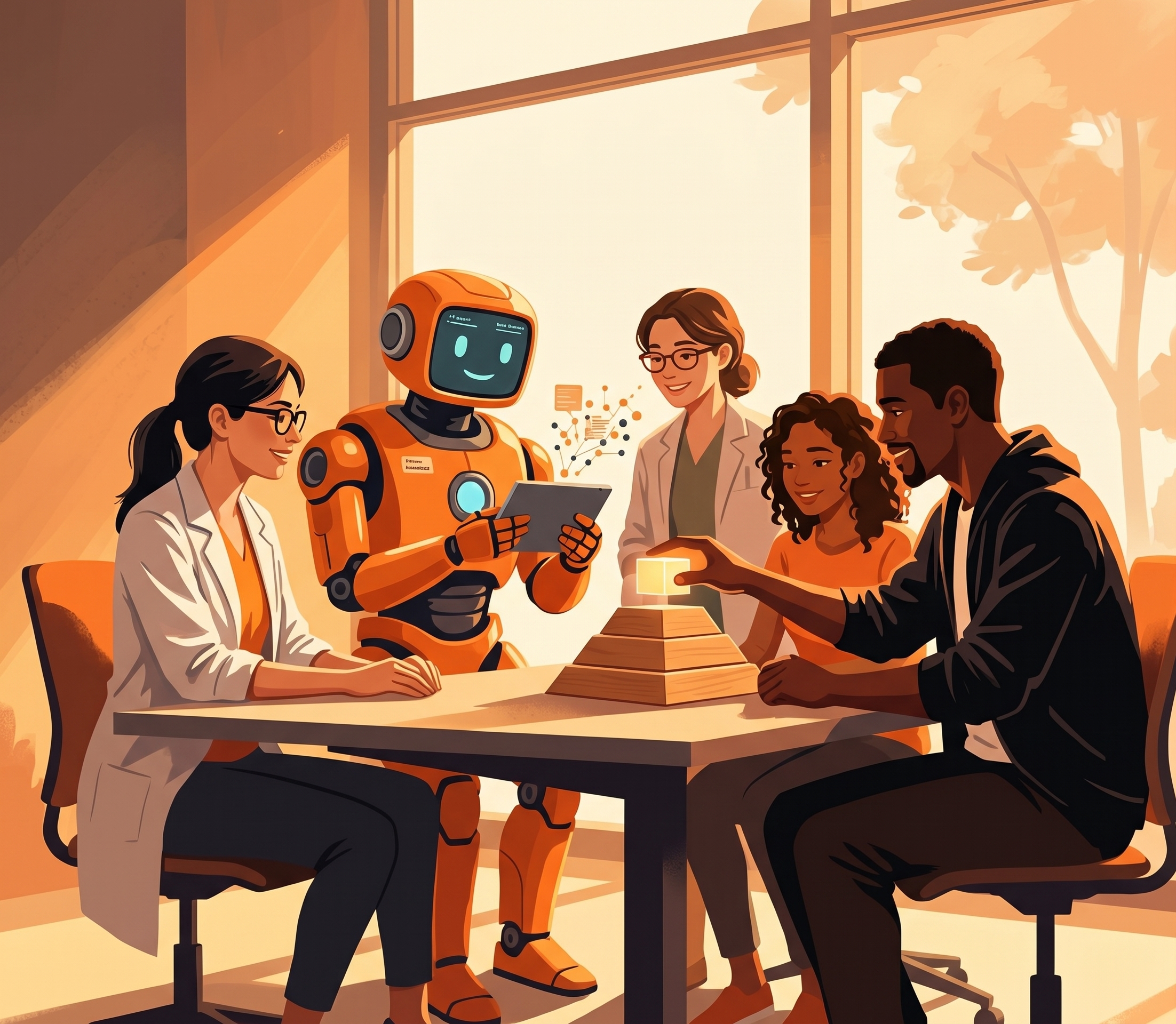
As we begin this new year and new era in education, the call to action for teachers is clear: embrace AI, not as a replacement, but as an ally. In doing so, we not only future-proof our profession but also enrich it, blending the timeless art of teaching with the innovations of our time. The future-proof teacher is a hybrid: a guardian of human connection, an embracer of technology, and a lifelong learner, ever-ready to adapt and evolve. And again, no, you will not, cannot, be replaced.




Leave a Reply