

by Fiona Reynolds
If you are “paying attention” to the pundits on both politics and technology, you’ve probably heard the term “the attention economy.” The “attention economy” is a fundamental shift in how we interact with information and technology. Every notification, recommendation, and personalized feed is a strategic move designed to capture and retain our focus. This isn’t just about distraction—it’s about the systematic reshaping of human attention.
At the same time, we may be trying to train our attention to become longer and more focused. We are battling our dwindling attention spans by using mindfulness apps, pomodoro methods, and “do not disturb” features on our technology. We are, of course, seeing, and perhaps waging, the same battle for our students’ attention. A possible difference is that they may not remember a time when their attentions were not being pulled to a device. I do, and I’m appalled at my own lack of self-control, but I’d still like to play one more game of Mahjong before bed.
This week, I heard a furthering of the attention economy to the “intention economy.” Where the attention economy sought to capture our moment-to-moment awareness, the intention economy aims to predict and subtly guide our future actions. Perhaps drawing from Steve Jobs’ insight that “people don’t know what they want until you show it to them,” these systems use an intricate web of data—from search histories to health app metrics—to anticipate our desires before we even recognize them.
Large Language Models (LLMs) have become the advanced scouts in this terrain, parsing our digital footprints to understand not just what we’re doing, but what we might want to do next. The marshmallow test of self-control has been reimagined: these systems offer personalized, algorithmically crafted marshmallows that are almost impossible to resist.
Read more about the intention economy here.
Developing Digital Awareness
So, what can we do both for ourselves and our students in this Digital Citizenship Week to help both recognize the forces at play on our attention and intentions and to have strategies to combat this?
- Awareness Through Comparison: Have students examine their social media feeds across different platforms. This simple exercise reveals how algorithms curate personalized information ecosystems, subtly shaping perception and interest.
- Interdisciplinary Exploration:
- History classes can analyze past media manipulations and draw parallels to contemporary digital strategies.
- Science courses can deconstruct search algorithms, examining how search results vary based on individual digital profiles.
- Literature offers powerful metaphorical landscapes—Kurt Vonnegut’s “Harrison Bergeron” keeps calling to me. I also saw a beautiful adaptation of Our Town that starts with actors on stage just looking at their phones and ends in darkness with those phones pointed at the audience with their flashes on after Emily says, “That’s all human beings are! Just blind people.”
- Critical Reflection: Move beyond awareness to agency. Challenge students to identify the hooks that capture their attention and develop personal strategies for digital self-regulation.
Technology as a Tool, not a Master
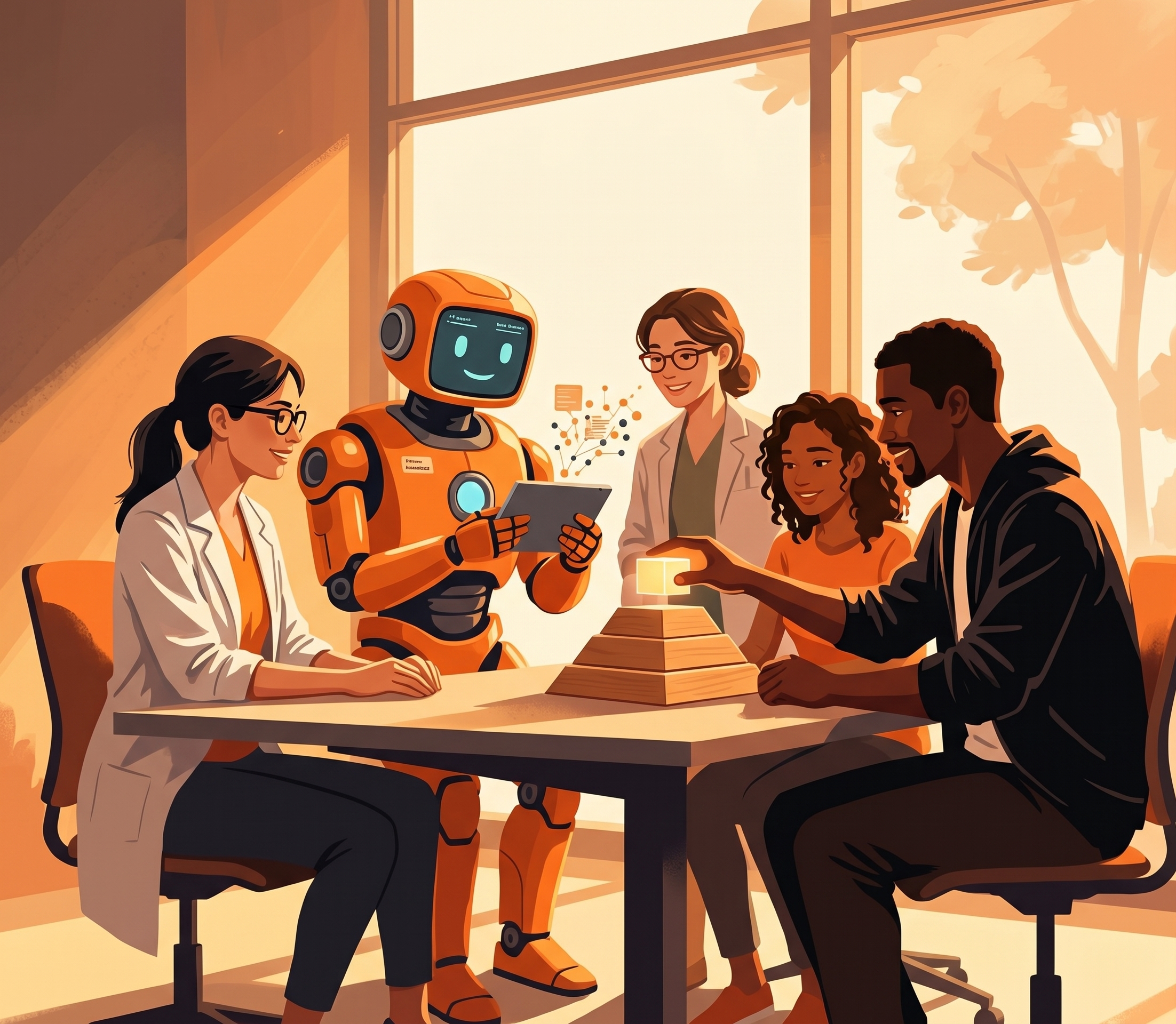
At UnconstrainED, we don’t view technology as an adversary, but as a potential ally in human development. Our mission is to purposefully use these tools as platforms for genuine learning and connection and not attention traps.
We want to cultivate a critical, intentional relationship with technology and to build digital literacy that empowers us to:
- Recognize algorithmic influences
- Make conscious choices about digital engagement
- Preserve and enhance critical and ethical thinking skills
The Challenge
I’ll be the first to admit—awareness doesn’t automatically translate to changed behavior. Even as I write about the dangers of algorithmic manipulation, I’m conscious of my own weakness for that “one more game” of online Mahjong. This very struggle underscores the complexity of our relationship with technology.
Our challenge is not to achieve perfect resistance, but to develop ongoing, intentional practices of digital awareness and self-regulation.
How do you experience the push and pull of the attention economy? What strategies have you discovered for maintaining focus and intentionality in a world designed to fragment our attention?



Leave a Reply