
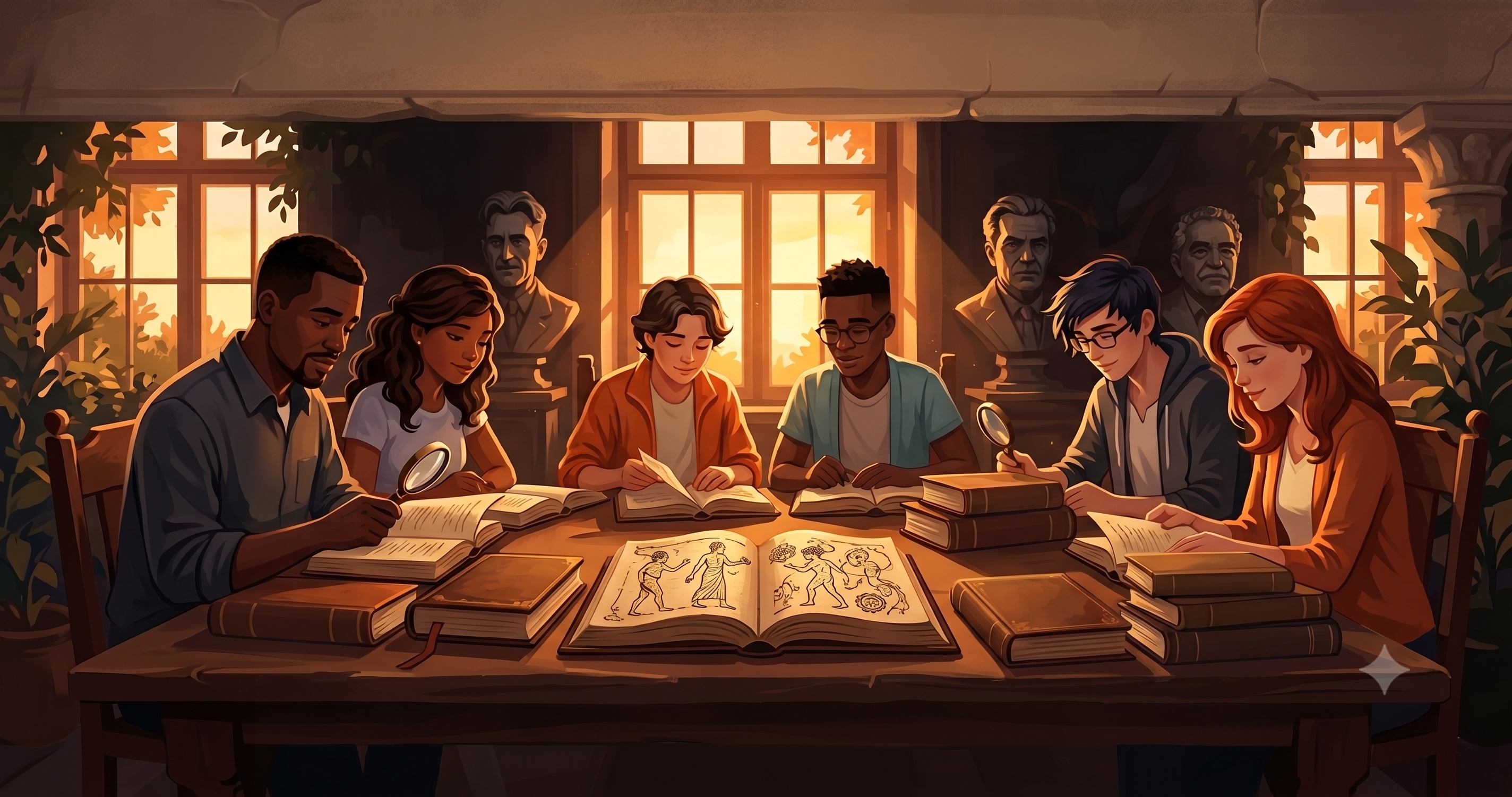
The great artists and thinkers of past centuries are being rediscovered as prophets. None of them intended it. That’s what makes it eerie.
There is something quietly astonishing happening in the age of artificial intelligence: the great artists and thinkers of previous generations are being rediscovered — not as historical figures, but as prophets. Kafka, Borges, Orwell, Huxley, García Márquez. None of them intended their work as a commentary on machine learning. They were writing about power, about memory, about what it means to be human in a world that resists understanding. And yet their relevance today is almost eerie — as if genius, in its deepest form, reaches past its own moment and lands precisely where it is needed most.
García Márquez is one of those figures. And nowhere is his second life more potent than here.
He understood solitude as a wound inflicted not by isolation, but by being misunderstood. Latin America, he argued in his 1982 Nobel Prize speech, suffered not from lack of connection to the world — but from the world’s failure to truly see it. The parallel to our moment is precise: we, too, are being misread — not by others, but by the tools we have built and too readily believed.
We are living that same wound right now. And the name of it is artificial intelligence.
Not because AI is malevolent. Not because it is wrong. But because millions of people are using it the way the outside world once used Latin America — as a convenient source of output, without the discernment to interrogate what they’re actually getting.
“…the day might come when things would be recognized by their inscriptions but that no one would remember their use.”Gabriel García Márquez · One Hundred Years of Solitude
In the novel, during Macondo’s plague of insomnia, the townspeople began to lose their memory — and their solution was to label everything. Tag the cow. Tag the table. Tag the door. But the labels couldn’t hold.
We are living in Macondo. We have the labels — the outputs, the summaries, the generated text — and we are forgetting, slowly, to question their use.
NATURE HUMAN BEHAVIOUR · 2024
Glickman & Sharot — UCL / MIT
Human-AI interactions create a feedback loop that amplifies bias significantly more than interactions between two humans — and people are largely unaware it is happening.
HARVARD BUSINESS REVIEW · JAN 2026
Chang & Grant — “When AI Amplifies the Biases of Its Users”
People working alongside AI are routinely less discerning about AI’s output than they would be about a colleague’s. We give the machine more benefit of the doubt than we give each other.
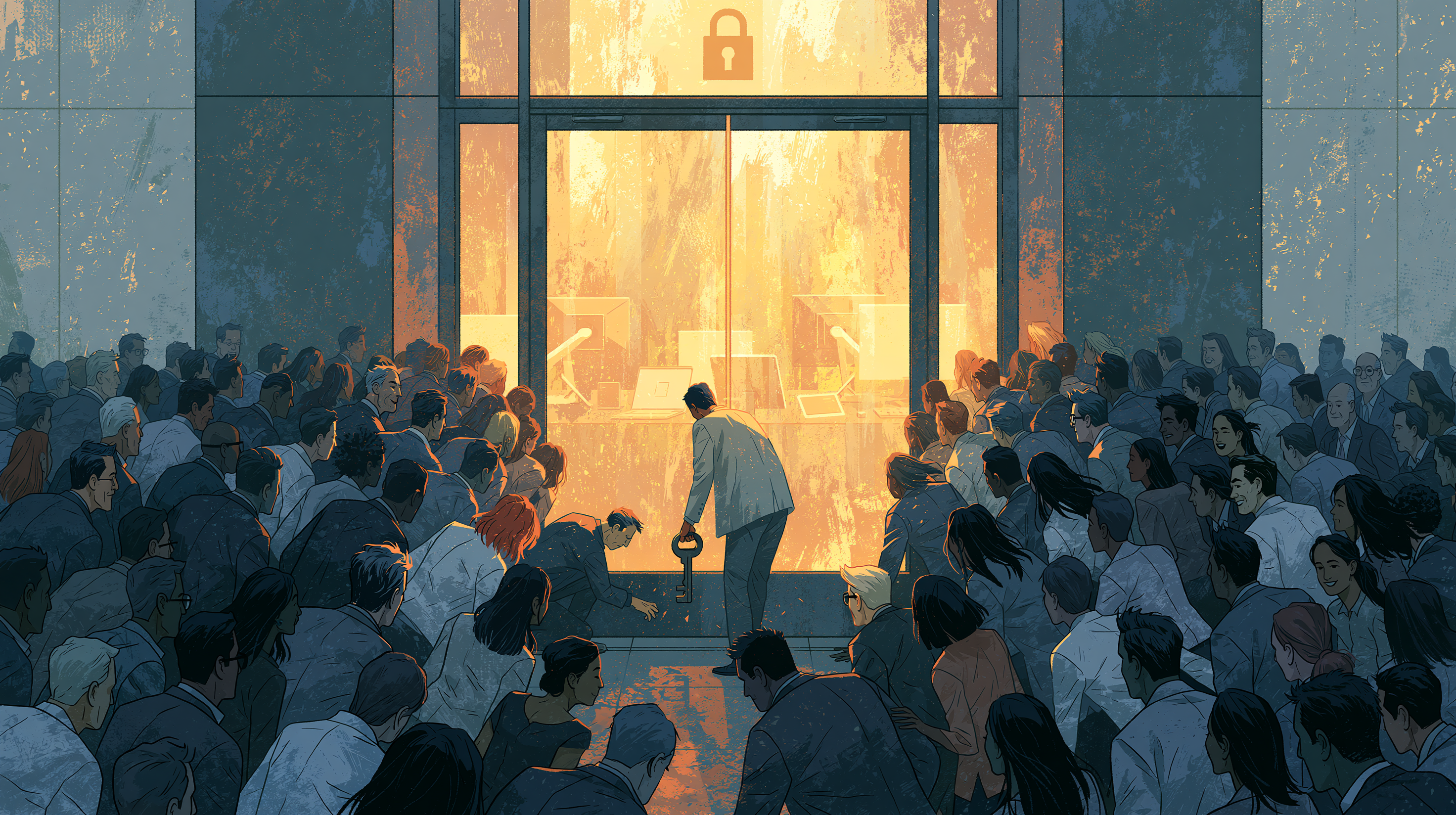
We have, in some fundamental way, begun to outsource not just our labor — but our judgment. That is not a productivity upgrade. That is a new kind of solitude.
THE CENTRAL ARGUMENT
AI literacy without human judgment is not a skill set.
It is a liability.
The future does not belong to the heaviest users of AI. It belongs to those who know when to trust it — and when to push back. Those who can read the texture of an AI response and sense what’s been flattened, what’s been averaged, what’s been confidently wrong. Those who bring to AI what AI cannot bring to itself: genuine stakes, real context, earned intuition, the willingness to say this isn’t right.
That is not anti-AI. That is the whole point of AI.
García Márquez closed his Nobel speech with a vision of escape from that solitude — a “new and limitless Utopia” where the lineage of isolation finally earns a second chance on earth.
That second chance is available to us. But it requires something the Buendía family never managed: waking up before the pattern repeats.
The pattern goes like this. AI generates. You accept. AI generates. You accept. Generation after generation of unchallenged output, until you are no longer a knowledge worker — you are a knowledge courier. A human node in a system that was supposed to serve you. Your solitude doesn’t announce itself. It accumulates, quietly, in the gap between what you could think and what you simply forwarded.
The people who will matter in this next era are not the ones who generate the most. They are the ones who discern the best. They will challenge the output. They will use AI as a thinking partner, not a thinking replacement — and in doing so, they will be more themselves, not less.
Their solitude will shrink.
One hundred years of solitude.
Or a second chance.
The choice is still ours to make.
THE FUTURE BELONGS TO THOSE WHO CHALLENGE AI.

Leave a Reply