
By Baylee Lindell Schneier
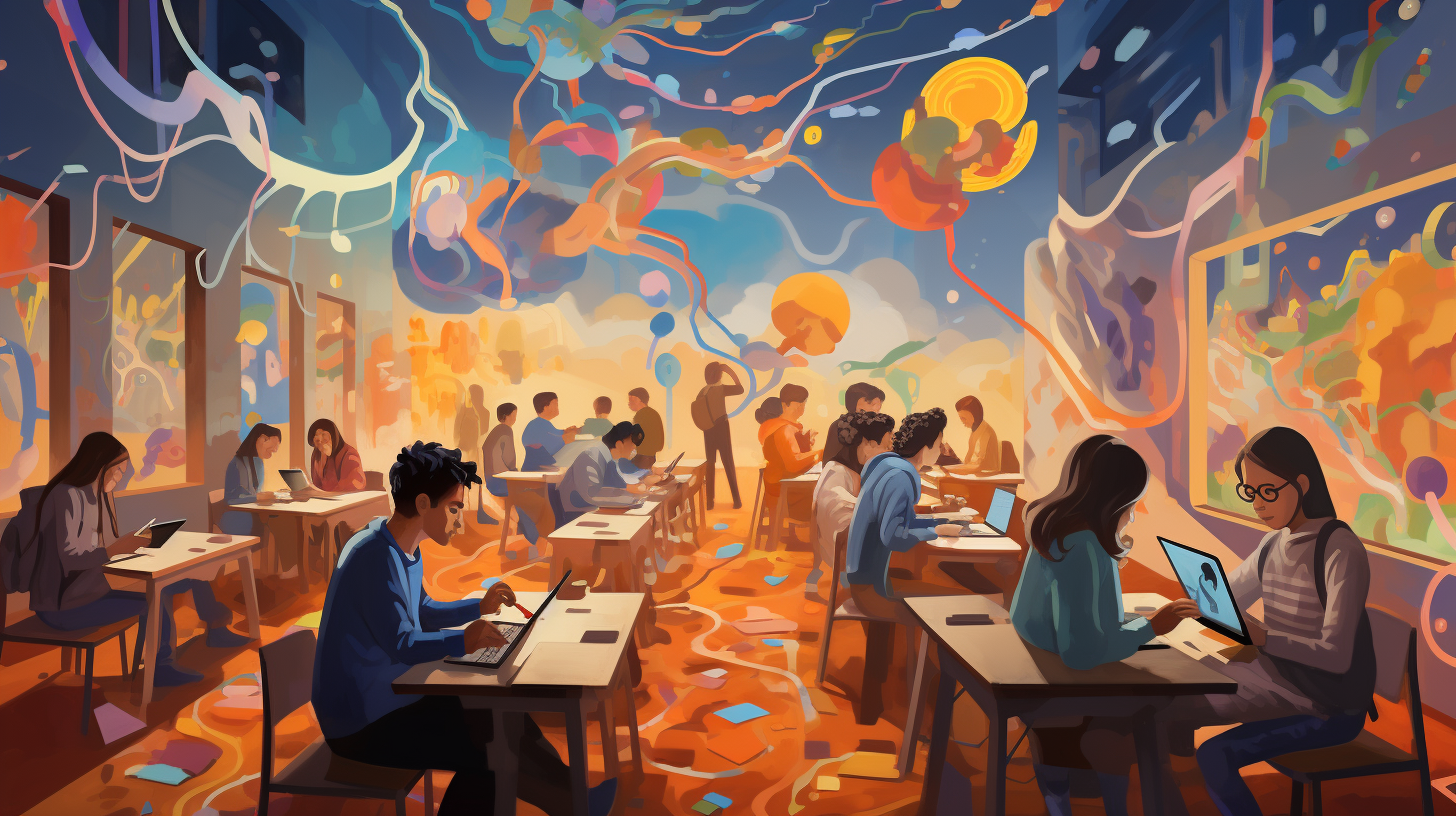
Let’s talk about something that’s changing art in classrooms like we never expected. These days, students aren’t just picking up paintbrushes—they’re grabbing tablets, mixing digital tools with traditional techniques, and using AI as a kind of creative sidekick.
For a long time, teachers were pretty nervous about bringing technology into creative spaces. The worry was that digital tools might suck the soul out of artistic expression. But here’s the interesting part: AI is actually doing the opposite. Instead of replacing creativity, it’s giving students new ways to explore, experiment, and think about art that they never would have considered before.
This isn’t just about generating cool images or playing with digital effects. It’s about completely reimagining how we approach the creative process. Where art education used to be pretty straightforward—come up with an idea, sketch it out, create the final piece—AI is introducing a more playful, experimental approach. Now, students have tools that can generate unexpected visual starting points, push them outside their comfort zones, and inspire directions they might never have discovered on their own.
Breaking Disciplinary Boundaries: AI Beyond the Art Studio
While these AI tools shine brightest in visual arts, their potential extends to virtually every classroom. Let’s explore how multiple AI tools can transform learning across disciplines:
History and Social Studies: Narrative Visualization
Imagine a history class where students use Canva AI to generate visual representations of complex historical concepts. A student studying the Industrial Revolution could prompt the AI to create an infographic showing the transformation of urban landscapes, then annotate and expand on this initial visualization with research-based details.
A project might look like this:
- AI generates a base image of a 19th-century city transitioning from agricultural to industrial
- Students add historical context, population statistics, and personal stories
- The result becomes a multilayered, visually engaging historical narrative that brings dry textbook information to life
Science Communication: Explaining Complex Concepts
In a biology class studying cellular processes, a student might use DALL·E to visualize mitosis by prompting: “Microscopic view of cell division, with vibrant colors showing chromosomes splitting, using a style that looks like a scientific illustration mixed with abstract art.”
This unique visualization transforms a potentially dry scientific concept into an engaging, memorable image that helps students understand the complexity of cellular reproduction.
Language Arts: Creative Writing and Conceptualization
An English class exploring character development could use Artbreeder with a prompt like: “A mysterious librarian with eyes that hint at hidden stories, blending elements of Victorian mystery and modern complexity, wearing a coat that seems to shift between time periods.”
Students can use this generated image as a starting point for character sketches, short stories, or poetry, allowing AI to spark their creative writing process.
Mathematics: Visualizing Abstract Concepts
In a geometry or algebra class, students might use Adobe Firefly to create a visual representation of mathematical concepts with a prompt such as: “Fractal pattern showing exponential growth, using colors that transition from cool blues to warm oranges, with mathematical grid lines subtly visible in the background.”
This approach transforms abstract mathematical principles into visually compelling images that help students understand complex concepts through visual metaphors.
Runway ML: Interdisciplinary Storytelling
In a multimedia or interdisciplinary studies course, students could use Runway ML to create a prompt like: “A time-lapse video showing environmental changes, blending satellite imagery of a landscape transforming from pristine wilderness to urban development, with subtle transitions between seasons.”
This tool allows students to create dynamic visual narratives that could be used in environmental science, geography, or social studies projects.
The Broader Educational Implications
These examples underscore a critical point: AI isn’t about replacing human creativity—it’s about expanding our capacity to understand, communicate, and imagine.
We’re not just teaching art—we’re preparing students for a creative landscape where technology and human imagination dance together. AI art tools aren’t about generating perfect, finished pieces. They’re about expanding creative possibilities, challenging conventional thinking, and empowering students to see the world—and their own potential—differently.
The most exciting art is yet to be created, and it will emerge from the beautiful intersection of human creativity and technological innovation. Are you ready to reimagine art in education?


Leave a Reply