

By Baylee Lindell Schneier
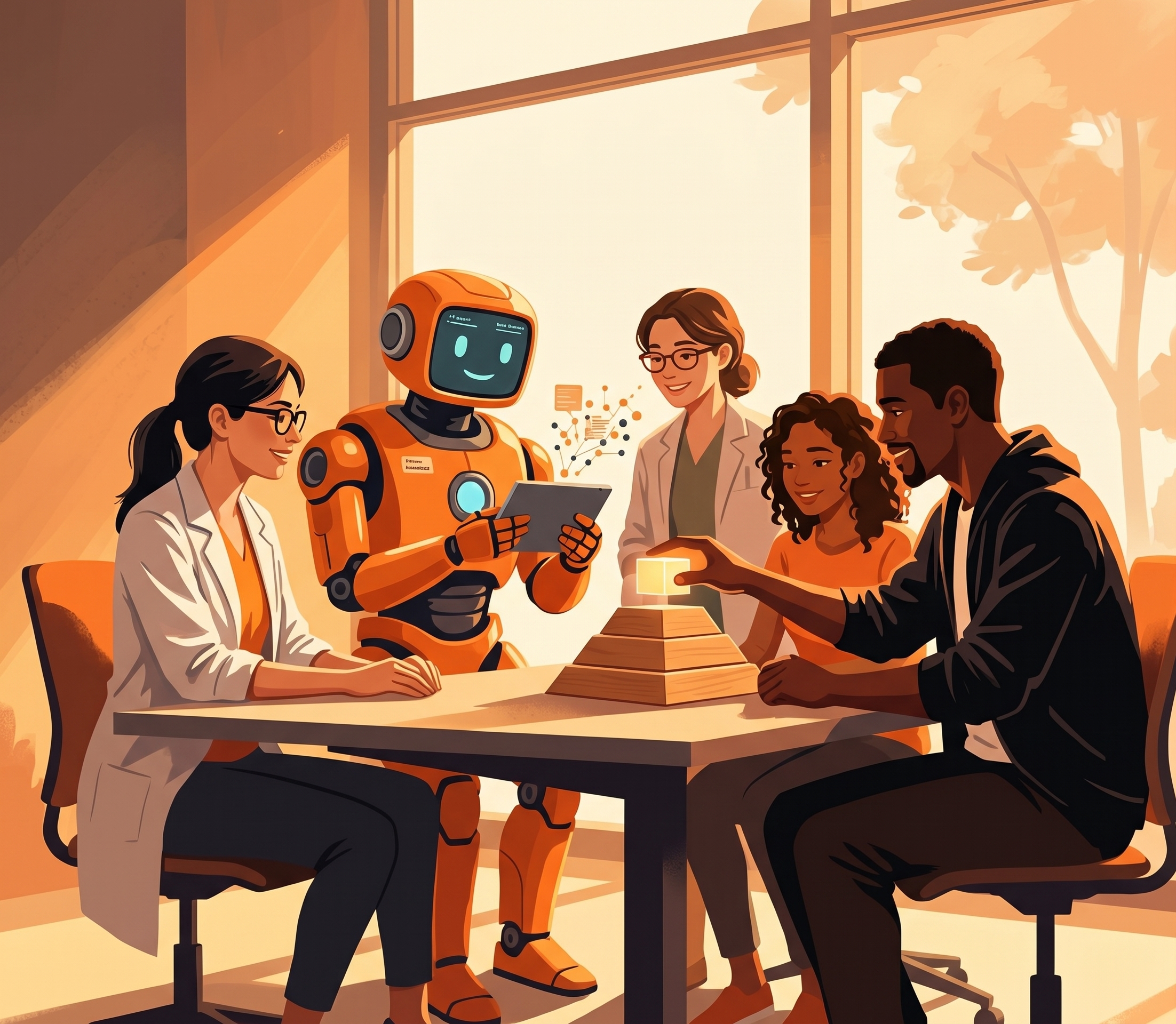
There’s a misconception floating around that AI is here to steal teachers’ jobs, swoop in like a robot army, and leave classrooms teacher-less. (Cue the dramatic sci-fi music.) But here’s the reality: AI isn’t the enemy. It’s not coming for your Kahoot, your whiteboard, or your teaching style. AI is here to support you, like that co-teacher who always has the best resources or that one brain break you can’t teach without. In fact, AI might just be the ultimate teaching sidekick.
Sure, the idea of AI can sound intimidating at first. The fear that AI will replace human interaction is understandable, but here’s the twist: AI excels in the areas where teachers need the *most* support—administrative tasks, lesson differentiation, feedback, and content creation. All the things that eat away at your planning time? AI can handle them while you focus on the parts of teaching that matter the most: building relationships and sparking curiosity in your students.
Take lesson planning, for example. Gone are the days of spending hours crafting every detail of your plan, only to discover halfway through the lesson that your students need something completely different. AI tools such as Eduaide, MagicSchool, and LLMs (Large Language Models like ChatGPT or Claude) can generate lesson ideas, customize materials based on your students’ academic levels, and even offer suggestions to make topics more engaging. Think of it as a supercharged brainstorming partner that never runs out of creative energy.
And what about feedback? We all know students thrive when they get timely, constructive feedback, but it’s not always realistic to provide detailed responses to every student on every assignment. AI tools can step in here, providing automated feedback on basic tasks, freeing you up to focus on more personalized, in-depth responses. This doesn’t mean the feedback is cold and robotic—AI can be trained to offer feedback in the tone you want, so your students still feel heard and understood.
In fact, I’ve seen this firsthand. Before I joined UnconstrainED, I took their course AI for Learning Design where my capstone project was to build a custom GPT chatbot for my students. The idea was simple: students ideating for a large project could interact with the chatbot to receive feedback and prompting. As students worked through their ideas, the chatbot helped guide their thought process, offering suggestions and encouraging them to explore different angles. This personalized interaction allowed me to focus on high-level feedback while the students got immediate, meaningful guidance to push their thinking forward.
Differentiation is another area where AI shines. Every classroom has students with varying levels of understanding, and creating customized materials for each learner can feel like an impossible task. AI tools like Diffit or Brisk can analyze student performance and automatically suggest modifications, scaffolding, or enrichment activities. Imagine having an assistant who hands you ready-to-go materials for your struggling students *and* advanced learners, with just the right amount of challenge for each.
Of course, let’s not forget AI’s role in creating fresh, engaging content. Need a new way to explain photosynthesis? Or maybe you’re designing an interactive timeline for a history class? AI tools can help generate ideas, craft presentations, and even create quizzes in minutes. You’re still the expert, and you’ll still curate and adjust the content, but AI helps you cut down the time it takes to pull everything together.
In the end, AI isn’t a replacement for teachers, it’s a resource for teachers. It’s a tool that enhances what you already do best. So, instead of worrying about AI taking over, let’s think of it as the co-teacher you never knew you needed. The best part? It doesn’t need a coffee break.



Leave a Reply