


Over the past 25 years, I’ve been lucky enough to work in schools that have encouraged teachers to take chances. The biggest chance that I took as a young teacher was shifting my 8th grade English class from a more traditional, teacher-led approach, to one based on Nancie Atwell’s reading and writing workshop framework. I dutifully built up a reading library in my classroom and designated spaces for independent work, collaboration with peers, and coaching with me. I let parents know what was coming and launched. I was scited (both scared and excited as my daughter says) to get started.
I had no idea what a profound effect the workshop approach would have on me and my students. Their writing became more personal and reflective. They experimented with more genres and styles of writing than I could have ever imagined, and because I spent most of my time in 1:1’s or groups, I was able to meet my students where they were, scaffolding and expanding possibilities. One aspect of this workshop approach is having an authentic audience, so my students submitted to magazines, websites, books, and our own school publications. They also wrote quite a few letters to government officials through the Amnesty International Write for Rights campaigns. We celebrated every publication (there were a lot!) and kept on going. They learned that grammar and conventions matter if you want to be published. More importantly, my students learned that their voices and perspectives mattered. I learned the same – that by giving up my dominant teacher voice – my students came to me for advice and trusted me as not just a teacher but a writer too.
Now I will say this little utopia was possible partially because I had 20 or fewer students in a class, and I had a double block with my students every day. I had time to meet with them in small groups, individually, and as a whole. We had time to develop skills, relationships, and pieces of writing. This would prove to be much harder with less time and more students.
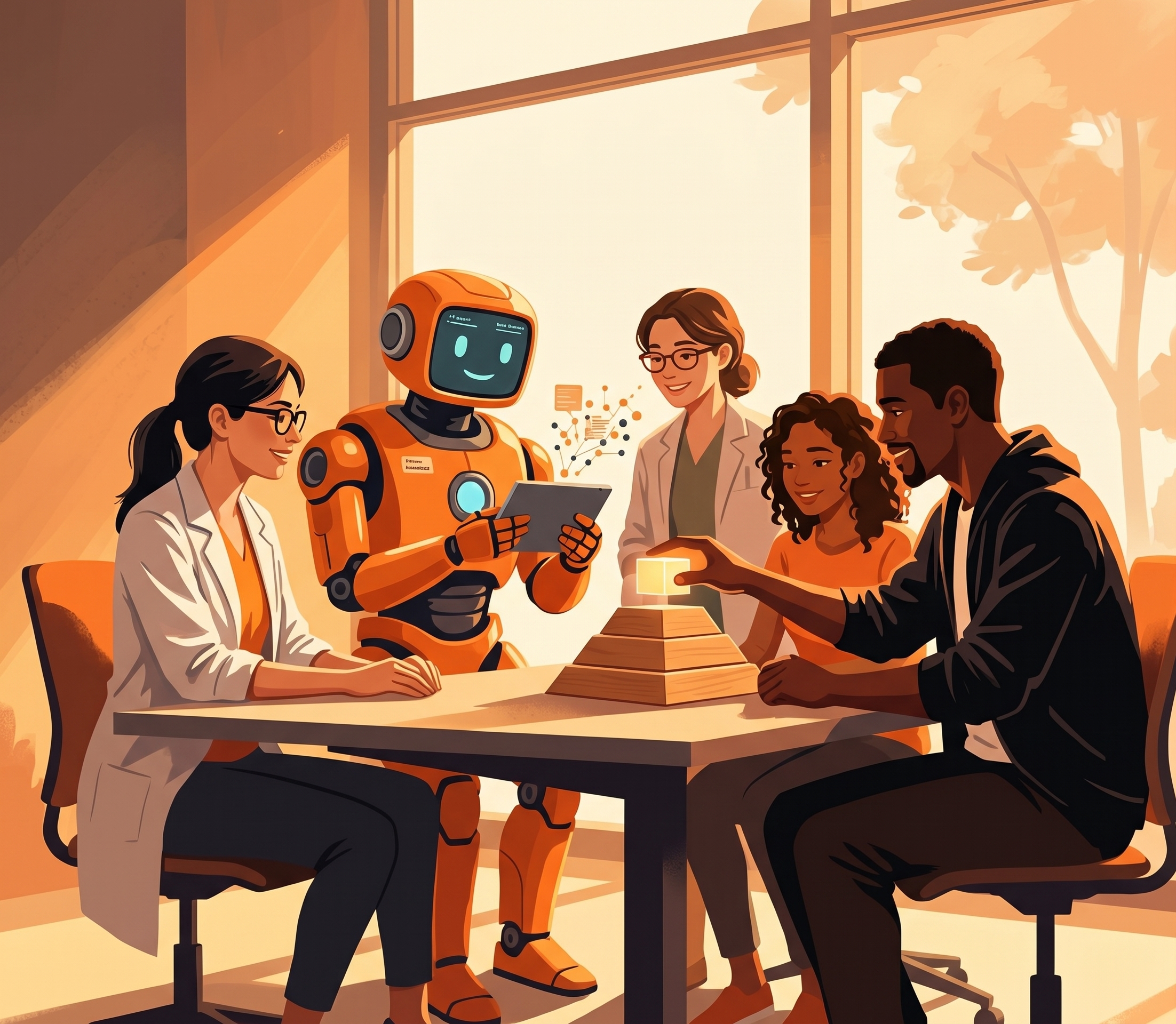
I think this experience is why the possibilities of AI in education are so exciting to me. I know what one-on-one time and coaching can do for learners, and LLM’s that are trained as coaches, such as Khanmigo, can offer the types of support, encouragement, and expansion that I could when I had the gift of time. These coaches are not a replacement for teachers, because most teachers don’t have the time to provide the coaching, scaffolding, and individualized care that they’d like to on a daily basis. The AI coaches can simply be seen as an aide to teachers; an aide who, with prompt design, can come quite close to what the teacher might recommend and give the teacher time for one-on-one and group work. This time with students can help to build relationships and deeper understanding of what makes them tick, which, in turn, may leave the teacher with questions about what to offer next for a student.
This is where the AI coach can be a peer for teachers as well. Way back when I was trying out the workshop approach, I was the only teacher in the school experimenting with it. This was also before social media, and so I experimented and fretted alone, well almost alone, my husband is also a teacher, so he heard a lot. I would have loved a coach to share my ideas and fears with, a Diane Sweeney or Jim Knight in my back pocket. This is now closer to being possible. Both teachers and students report that they like using ChatGPT to test assumptions and ask questions that they might be embarrassed to share with a colleague or peer. I know I am.
These AI tools aren’t just about efficiency; they’re about enhancing humanness in education – the need to ask silly questions, test new ideas, and try out a new form of poetry. By leveraging AI as an ally, we free up time to deepen connections with students, understand their unique needs and aspirations, and guide them more effectively. Ultimately, the goal is not to replace a teacher but to amplify their ability to inspire and nurture each student’s potential. In embracing these technologies, we’re not just preparing our students for the future; we’re actively shaping an educational landscape where little (or big) learning utopias can thrive.



Leave a Reply