

The conversation around Artificial Intelligence (AI) swings between awe and apprehension. While some view AI as a harbinger of a dystopian future, others see it as a tool that can help solve humanity’s most pressing challenges, from climate change to cancer. I certainly hope that we’re on the path to the latter.
For me, however, the possibility of AI is much smaller and more personal. It can give us back time to do what’s most important: be in community with family, friends, and colleagues, exactly what we missed over the past three years.

When I worked as a school leader, I used to say that the currency of schools is time. Despite advancements that have made life more convenient–hello online doctor’s appointments–and the many, many books and tools for productivity, we still find ourselves strapped for time. For educators it’s the multiple administrative tasks they manage on top of planning, grading, and teaching. In the business world, it might be juggling multiple projects with overlapping deadlines. This is where AI comes in. By automating routine tasks, AI can free up our time, allowing us to focus on, expand, and deepen what truly matters: human connections (and getting your children to school on time).
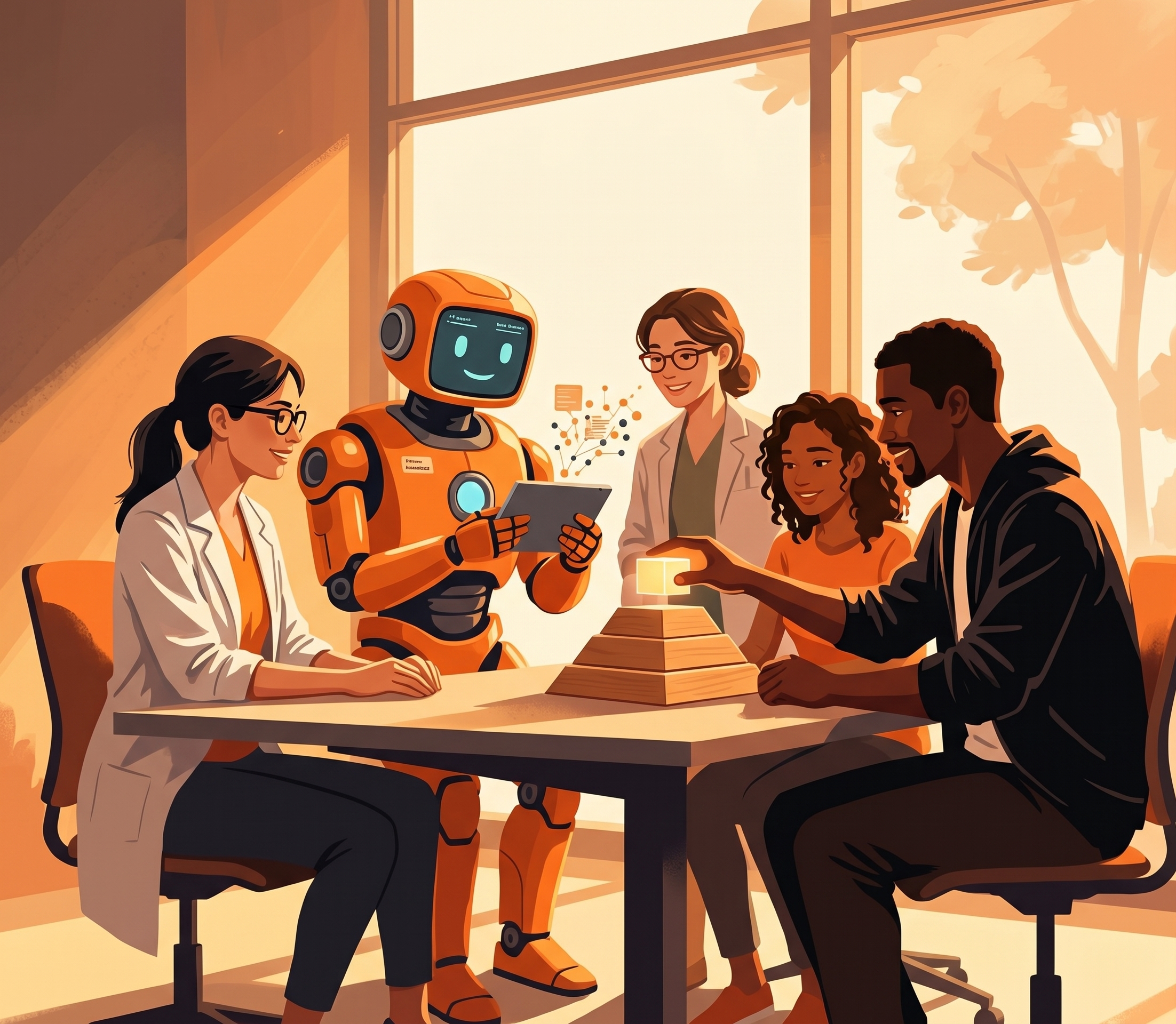
When a teacher has 30 students in a classroom or teaches over 150 students a day, it’s difficult to find enough time for small moments of connection, and yet we know children need to feel seen, heard, and valued to learn with ease. I can’t help but hope for the classroom of the future, where administrative tasks, for learners and teachers, are automated; students and teachers have real-time insights into engagement and understanding of what’s actually being learned; and, most importantly, where 1:1 check-ins and group dialogue are the norm. Teachers have been trying to do all of this by themselves. AI will allow them to do this without taking as much time away from their own families and friends. AI-driven platforms can already analyze student performance data (which has been anonymized, of course), identify gaps in student understanding, and recommend tailored lesson plans or additional resources. This can be enhanced by adding data on student interests and passions to further personalize learning experiences.
By automating the routine, AI can free us to focus on the essential: understanding each other and nurturing human connections. For educators, this means more time to engage with students on a personal level, fostering an environment where everyone feels like they belong. Outside schools, it means reclaiming time to be present with our families, friends, and communities. As we navigate the new dilemmas of the digital age, remember that the most advanced algorithms and technologies are ultimately tools—tools that can serve to enhance, not replace, our human experience.



Leave a Reply