

An Ancient Hero’s Journey as a Map for Integrating Artificial Intelligence with Purpose, Wisdom, and Aloha
“He slowed the sun so the people would have more light. He fished islands from the deep sea. He gave humanity fire. Māui did not act for himself alone — he acted so that all might flourish.”— The Polynesian Tradition of Māui
This week’s blog is born out of time I was deeply blessed to spend working with a remarkable group of educators and thought leaders at Kamehameha Schools in Hawaiʻi — a school with a profound mission to serve Native Hawaiian learners and honor the wisdom of their culture. The conversations we had about AI, identity, and the future of learning were among the most meaningful I’ve been part of. What follows grew from that soil, but the questions it asks belong to every school.
In the great tradition of Polynesian storytelling, few figures burn as brightly as Māui — the demigod trickster, explorer, and champion of the people. His legends do not celebrate power for its own sake. They celebrate transformation: the willingness to reach beyond the known horizon, harness extraordinary tools, and use them in service of community. His story is, at its heart, a story about what it means to learn, to dare, and to give what you discover back to the world.
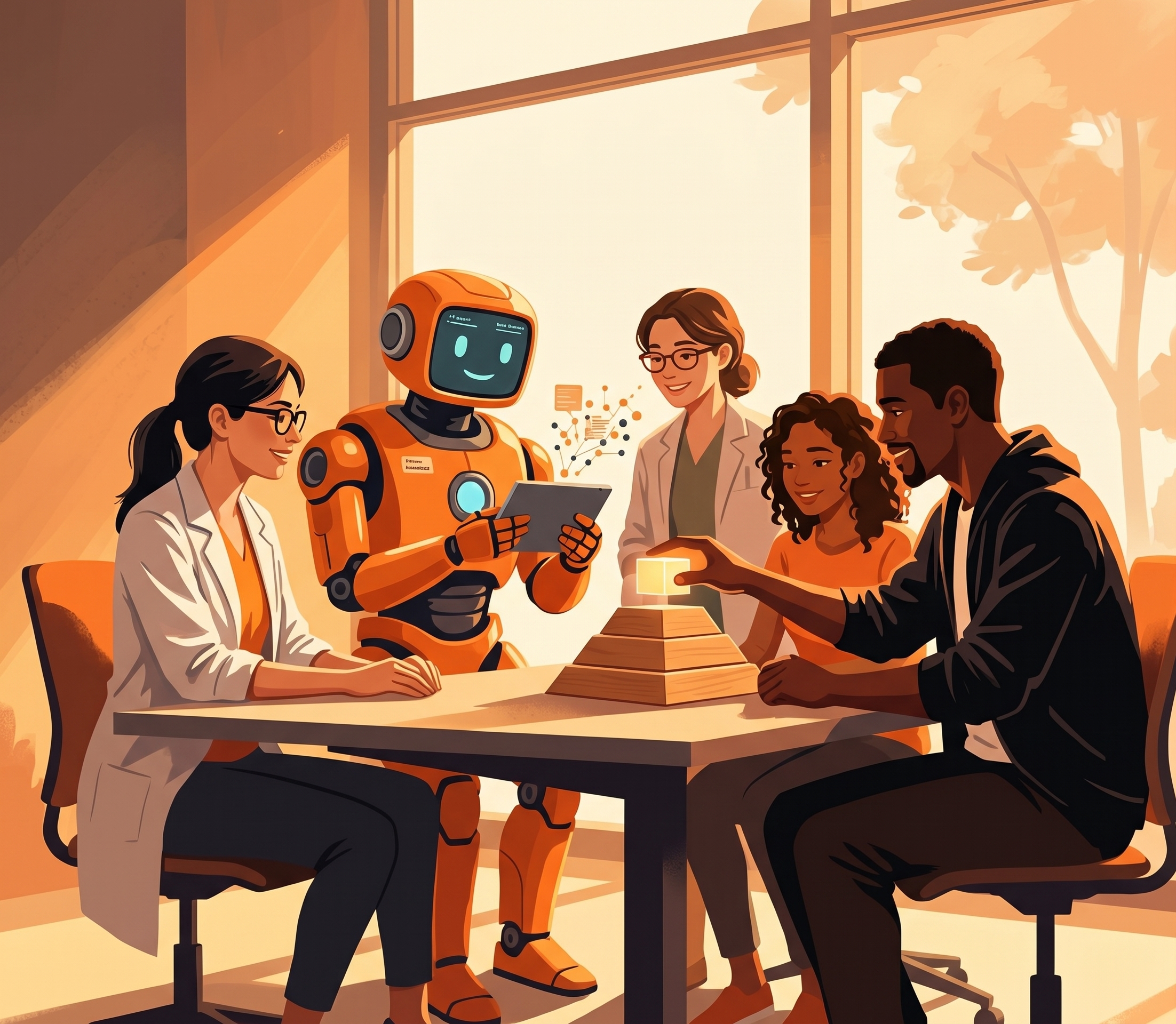
Today, schools everywhere stand at a similar threshold. Artificial intelligence is not a distant technology — it is already reshaping how students learn, how educators teach, and how knowledge is created and shared. The question is not whether to engage with AI, but how. Like Māui, we must approach this moment with intention, humility, and a clear sense of purpose. We must not merely adopt the tool — we must shape what it does for our people.
The seven acts of Māui’s legendary journey offer us a powerful map.
ACT ONE
Ka Hānau ʻAna — The Birth
Acknowledging the Moment We’re In
Māui’s story begins with a birth that almost didn’t happen — he was premature, thought unlikely to survive, wrapped in a topknot of hair and cast into the sea. But he endured. He emerged not from comfort or ease, but from uncertainty and wonder.
The arrival of AI in education feels similarly unexpected. Many of us didn’t see it coming with quite this force or speed. And yet here it is — alive, present, and already in the hands of our students and teachers whether we planned for it or not.
The first act in Māui’s journey — and ours — is to acknowledge this moment with honesty. AI is not a trend to wait out. It is a transformational force, and schools committed to transformational education must recognize this new era and take responsibility for guiding it well.
ACT TWO
Ka Makau — The Fishhook
Choosing the Right Tools with Intention
Māui’s most legendary tool was his enchanted fishhook, Manaiakalani — carved from the jawbone of his ancestor, imbued with mana, and cast into the depths to pull islands from the ocean floor. The hook was not magical simply because it was powerful. It was magical because it was chosen thoughtfully, prepared carefully, and wielded with purpose.
AI offers schools an extraordinary “fishhook” — tools that can personalize learning, surface insight in data, amplify teacher capacity, and open new worlds of inquiry for students. But no tool matters without the wisdom of how it is used. Manaiakalani did not fish islands by accident.
Intentional AI integration means asking, with each tool and platform adopted: Does this serve our learners? Does it honor our values? Does it strengthen or dilute the sacred relationship between teacher and student? We cast the hook with purpose — or we don’t cast it at all.
THE PRINCIPLE OF MANAIAKALANI
Not every tool deserves to be in our hands. The ones we choose should be selected because they extend our reach toward what we most deeply value — not because they are new, popular, or technically impressive.
ACT THREE
Ka Hoʻopau i ka Lā — Slowing the Sun
Creating Space for Deep Learning
Perhaps Māui’s most beloved feat was lassoing the sun. The days were too short — the people had too little light to work, to grow, to live fully. So Māui climbed to the top of Haleakalā — the House of the Sun — and snared its rays with a great rope, forcing the sun to slow its journey across the sky. He did not stop the sun. He gave his people more time.
One of AI’s greatest gifts in education is time. When AI handles mechanical burdens — grading routine assessments, generating differentiated materials, summarizing research, drafting first-pass feedback — it returns something precious to teachers and students alike: the freedom to think deeply, to converse meaningfully, to wonder, to create.
Thoughtful AI integration means deliberately engineering more “long days” — more hours for the thinking that only humans can do. More time for elders and community knowledge-holders to share their wisdom with students. More time for teachers to sit with a struggling learner. More time for collaborative, project-based exploration rooted in place, culture, and identity. AI should lengthen the light, not dim it.
ACT FOUR
Ka ʻAhi — The Fire
Igniting Teacher and Student Agency
Māui brought fire to humanity — not by hoarding it, but by enduring great struggle to wrestle it free and place it in the hands of the people. Fire transformed everything. It enabled cooking, warmth, craft, and ceremony. It changed what was possible.
The fire of AI is not in the algorithms themselves. It lives in what ignites within teachers and students when they understand what these tools can do and feel empowered to use them creatively. A teacher who knows how to leverage AI to design culturally responsive learning experiences has a new kind of fire. A student who knows how to query, critique, and collaborate with an AI model — rather than simply be served by one — carries that fire forward.
This means schools must invest deeply in professional development that is empowering rather than prescriptive. Not “here is the approved tool” but “here is what becomes possible — now create with it.” Agency, curiosity, and critical thinking are the fuels. AI is the spark.
Teacher as Navigator
Educators learn to steer AI with the same skill they bring to steering a waʻa — with deep knowledge, cultural rootedness, and human judgment.
Student as Creator
Students are not passive recipients of AI output — they learn to prompt, critique, synthesize, and build with AI as a collaborative partner.
School as Laboratory
The campus itself becomes a place of experimentation — celebrating brave tries, learning from failure, and modeling what thoughtful AI use looks like in community.
ACT FIVE
Ka Lawaiʻa ʻAna — The Fishing of Islands
Raising New Ground from the Deep
When Māui fished the Hawaiian Islands from the sea, he did not pull up something that already existed on the surface. He reached into unknown depths and elevated what had long been submerged. The islands were always there — it took extraordinary effort, vision, and a powerful tool to bring them into the light.
AI offers schools the chance to surface what has long been submerged in our educational landscape: the learning potential of students underserved by one-size-fits-all systems, the Indigenous knowledge marginalized in conventional curricula, the stories and voices that haven’t found adequate expression in traditional schooling.
AI-powered personalization can help every student — not just those who learn in the dominant mode — find pathways to excellence. AI can help document, translate, and preserve ʻōlelo Hawaiʻi and other Indigenous oral traditions. It can surface insights from generations of educational data to better understand what students need. Māui’s fishing wasn’t gentle — it took real effort. But what emerged was home.
ACT SIX
Ka Hihia — The Entanglement
Navigating Risk with Eyes Open
Māui’s story also carries warnings. In his final, fatal quest — to enter the body of Hine-nui-te-pō, the goddess of death, to win immortality for humanity — he fails. His companions laugh at the wrong moment, the goddess awakens, and Māui perishes. Even the greatest hero, wielding extraordinary power, can be undone by overconfidence, lack of preparation, or a moment’s carelessness.
AI carries real risks: the erosion of critical thinking if students outsource their thinking rather than developing it; bias embedded in datasets that can reproduce inequity at scale; the gradual loss of the human connection at the heart of great teaching; and questions of data privacy, intellectual ownership, and cultural sovereignty over Indigenous knowledge.
A school’s approach to AI integration must be one of clear-eyed, ongoing discernment. This means building AI literacy alongside AI adoption — so students and teachers can identify when AI is misleading them, when it reflects cultural bias, and when the human judgment it’s replacing should remain human. It means developing institutional governance around AI use that is transparent, communally held, and regularly revisited as the technology evolves.
Māui’s lesson is not to avoid the quest. It is to take it seriously — and to go in with your eyes open and your people beside you.
ACT SEVEN
Ka Mākia — The Legacy
Acting Always for the Generations to Come
Everything Māui did — the slowing of the sun, the gift of fire, the raising of islands — he did for others. Not for posterity in the abstract, but for the actual, living people in his community, and for those who would come after them. His legacy is measured not in what he accumulated, but in what he made possible for everyone else.
This is the deepest principle for AI integration in schools: every decision we make about technology must be made with our students — not just today’s students, but the generations we are preparing to inherit the world — as the primary measure. Does this choice serve their flourishing? Does it honor their identity and culture? Does it prepare them not just to use AI, but to shape it, govern it, and hold it accountable?
Māui’s mana did not come from the fishhook alone. It came from the love that guided the hand that held it. The best schools have always understood that education is an act of love — for children, for culture, for the future. As we step into the age of AI, that love remains the most powerful technology we possess.
THE HIGHEST STANDARD
The measure of our AI integration is simple: are our students more fully themselves — more capable, more curious, more grounded in who they are and where they come from — because of how we have used these tools? If yes, we are on the right path. If not, we course-correct. Always.
The Journey Continues
Māui was not a god who descended from on high with all the answers. He was a figure who learned by doing, who failed and tried again, who took extraordinary risks in service of something larger than himself. That is exactly the spirit every school can bring to this moment.
The integration of artificial intelligence into our learning ecosystems is not a project with a finish line. It is an ongoing voyage — a waʻa on open water, guided by the stars of our values, navigated with the deep knowledge of our people, and pointed always toward the horizon of our highest aspirations for every student who walks through our doors.
The ocean has always called us forward. So has the future. Let us answer — together, with intention, and with aloha.
E Ola Mau Ka ʻŌlelo Hawaiʻi
May the Hawaiian language — and spirit — live on forever.



Leave a Reply