

by Fiona Reynolds
I love talking to my children about current events and what the future will hold. One is 21 and one is 15, and they’re both incisive critics of the world, and both of them are deeply skeptical of AI and how it can cause chaos, especially to the careers they would like to be a part of. They’re both artists in different fields.
Their critical lenses are a part of their upbringing, as children of teachers who didn’t let “How was your day?” end with “Good.” We prodded them for more and still do. We wanted to know what they learned and what inspired them and what made them upset. This was certainly as parents, and also because we believed that what they were learning was important. Their critical lenses also came from their teachers, pushing them to think further than what was text, to think about the subtext and the perspectives not shown on the page, or video, or piece of art.
One of the fears about AI in education is that children will find or have a shortcut to thinking, a shortcut to incision that they have not come to through productive struggle. I share the same fear. I remember well, while I was in my teacher training, visiting a school where a teacher said, “Well with the internet all content is available, so we don’t have to teach that anymore,” and thinking how will students contextualize that content? I’ll admit I didn’t have the vocabulary for contextualization then, but it didn’t sit well with me. I was a social studies post-grad with a degree in political science- surely context and culture were the bones of understanding.
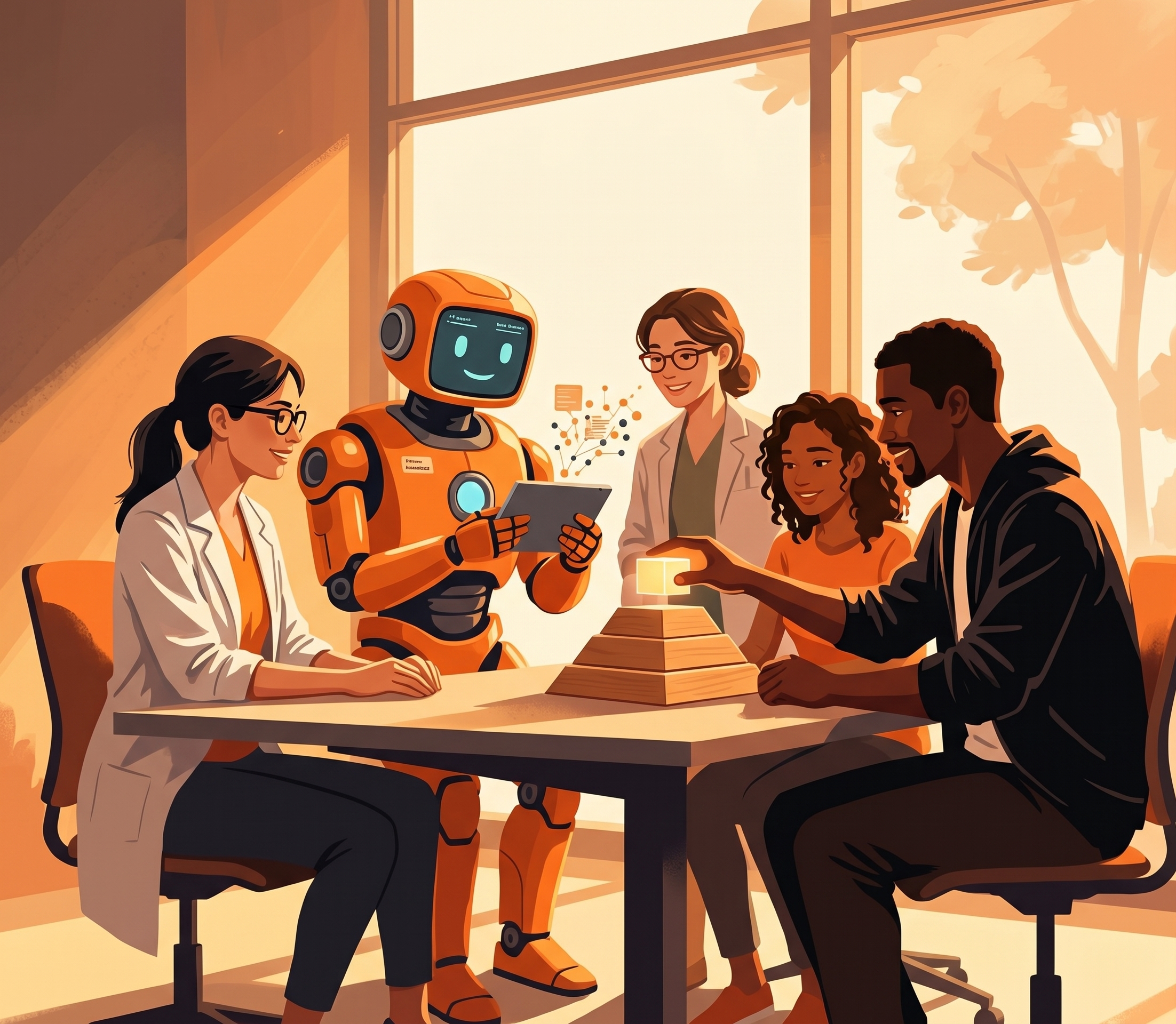
We are at a similar turning point now, where what we teach and how we teach it is in question. I think the difference is we are earlier to the game with AI. Educators are seeing the benefits to AI in planning and assessing, and we have the benefit of living through the internet age to know that context and culture matter. We leverage AI to provide the content at levels and in ways that are accessible to our learners, and can provide entryways to our learners in ways that have not been possible before (see UnconstrainED’s newsletter for more on this), and we still need to provide the context and cultural understanding that will make the content real and actionable.
I have to be honest; I see AI in education as a way for us to do what we’ve always wanted to do, to help develop people who think and grapple and do what their hearts and minds are aspiring to do. Classrooms can become the inclusive place where this happens. All students can access the concepts and content through leveled texts or translation, for instance, and can then engage in deep conversation and meaning making. Classrooms can be where ideas are shared, and debated and where a common understanding may not be reached but where empathy or understanding of other perspectives can be pondered and understood. This is the work of a teacher.



Leave a Reply